Case study / 02
Fine Art / Luxury · 2025–2026Sotheby's
Redesigning the seller portal and internal valuation platform to cut turnaround from 60+ days to under 10 — and grow submission conversion by 4 points.
Case study / 02
Fine Art / Luxury · 2025–2026Redesigning the seller portal and internal valuation platform to cut turnaround from 60+ days to under 10 — and grow submission conversion by 4 points.
Sotheby's is one of the world's leading luxury auction houses — operating across fine art, jewelry, collectibles, and high-value assets. As part of their digital transformation, Sotheby's aimed to modernize both the seller experience and internal valuation workflows to increase submission volume, accelerate specialist response times, and improve overall operational efficiency.
This engagement focused on two core platforms: the Seller Portal, a web-based experience where users submit items for evaluation and potential sale; and Phoenix, the internal tool used by specialists to evaluate, triage, and price incoming submissions.
Sotheby's faced critical inefficiencies across both sides of the seller journey — from the first submission click to the specialist's final valuation decision. The business needed to increase conversion, reduce valuation time, and improve operational throughput without compromising the premium brand experience.
Submission conversion hovered around 14%. Valuation cycles stretched to 60+ days, causing sellers to disengage.
Internal tools had limited workflow structure and high cognitive load. Specialists relied heavily on external tools to fill platform gaps.
Sellers had no post-submission status tracking. Lack of transparency drove inbound inquiry volume and increased support costs.
The project followed a structured, insight-driven approach: stakeholder alignment workshops with product, design leadership, and specialists; user research interviews across departments (Jewelry, Wine, Sports, Core Review); and a full end-to-end experience audit mapping the journey from submission through valuation to outcome.
Problem framing and prioritization used an impact vs. effort vs. business alignment framework. High-fidelity prototypes were validated through usability testing and refined continuously with stakeholders and engineering — always aligned with the Sterling Design System.
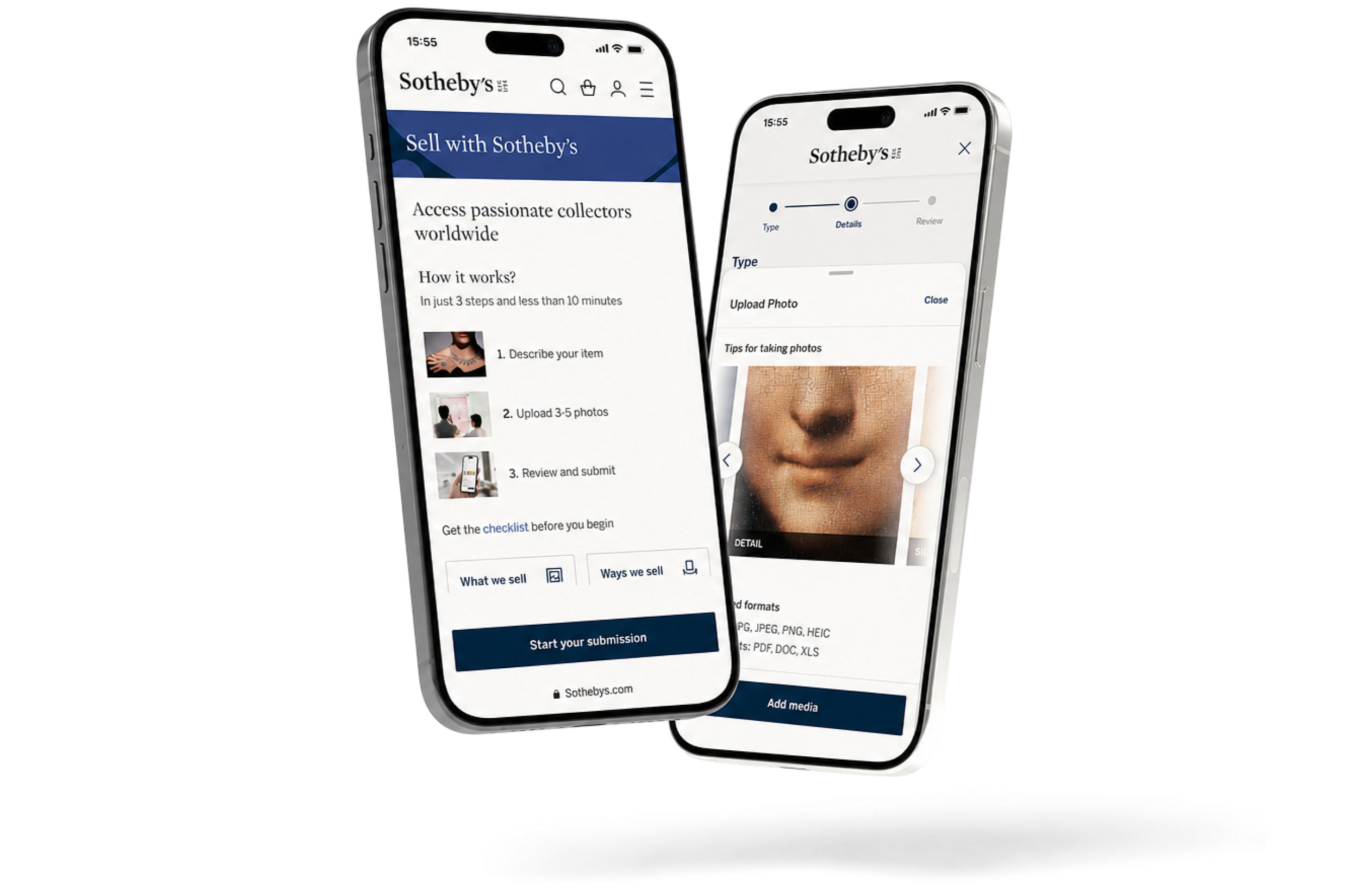
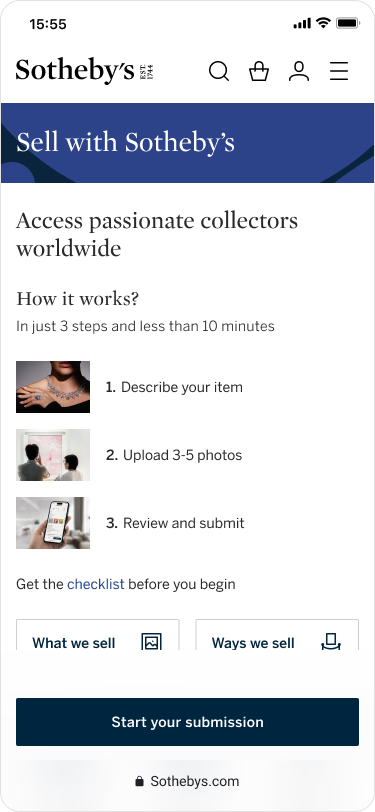
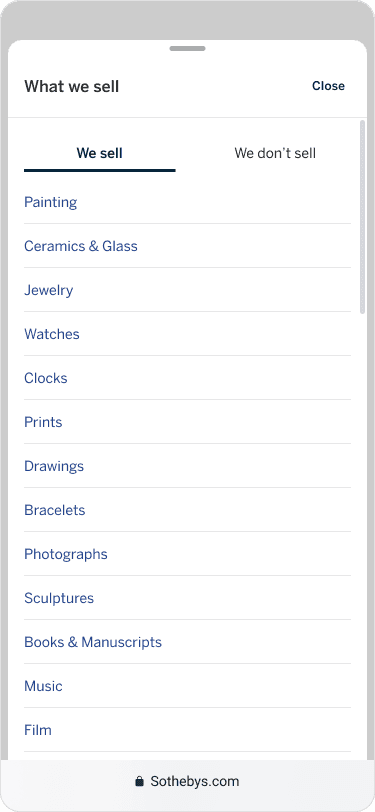
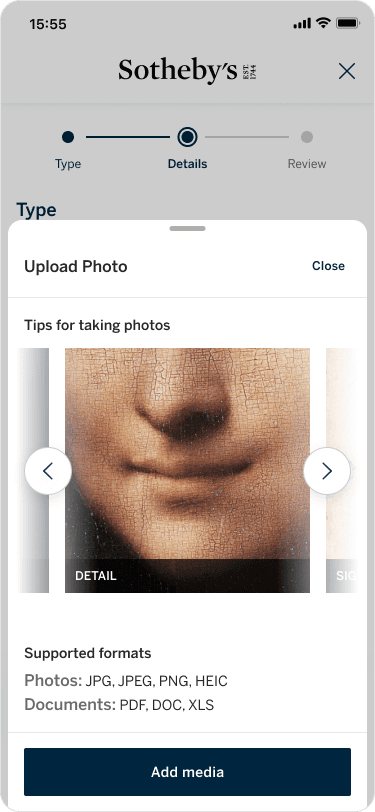
The Seller Portal was redesigned around progressive disclosure — surfacing only what sellers need, when they need it. A simplified submission flow reduced redundant inputs, while stronger trust signals and contextual guidance reduced first-time drop-off. Post-submission, a dynamic status tracker with contextual messaging replaced the previous silence.
The Phoenix internal platform was restructured around specialist mental models — clearer triage workflows, consolidated information hierarchy, and a unified communication layer connecting specialists directly with clients. Both platforms were aligned to the Sterling Design System for consistency at scale.




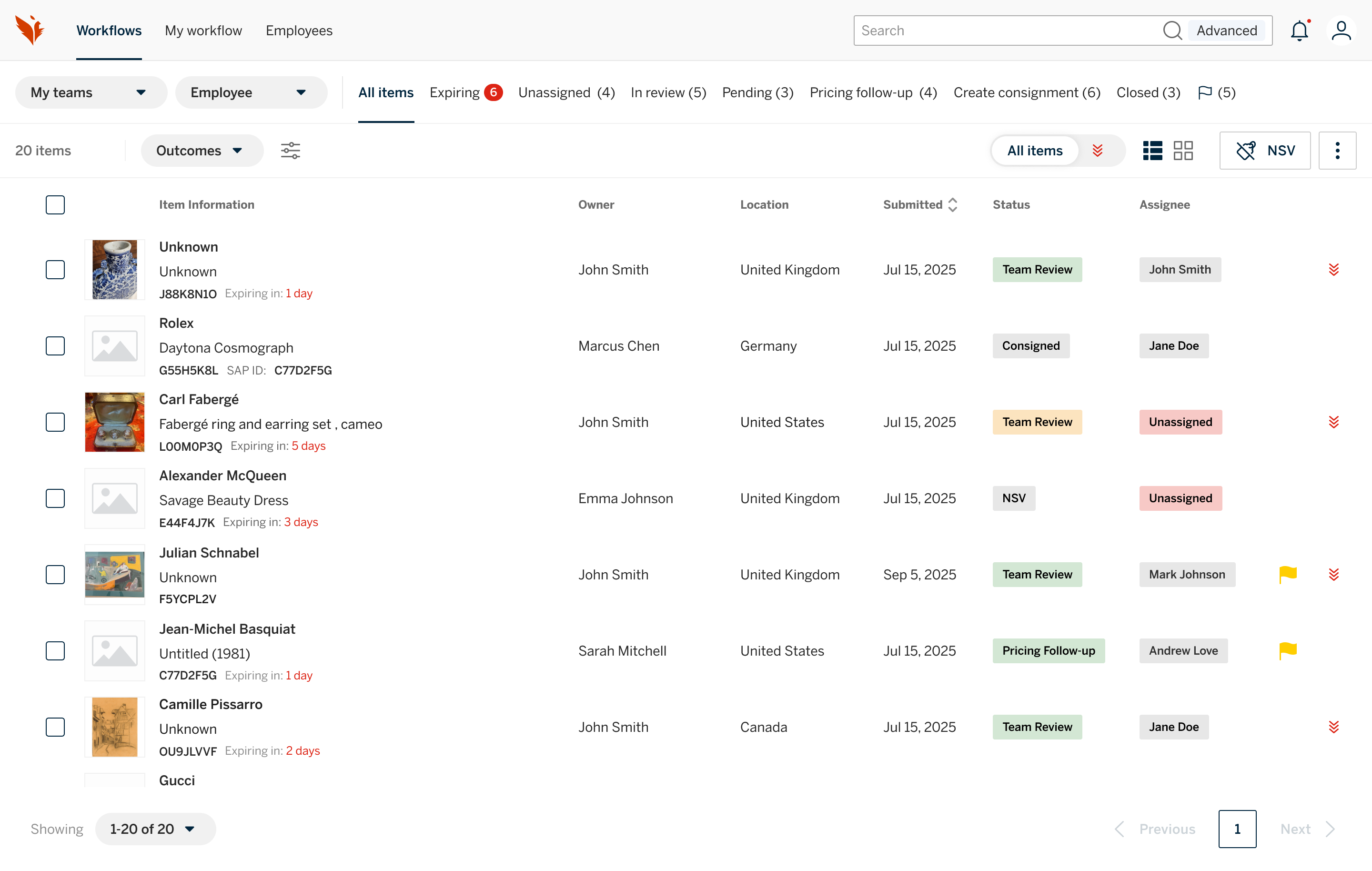
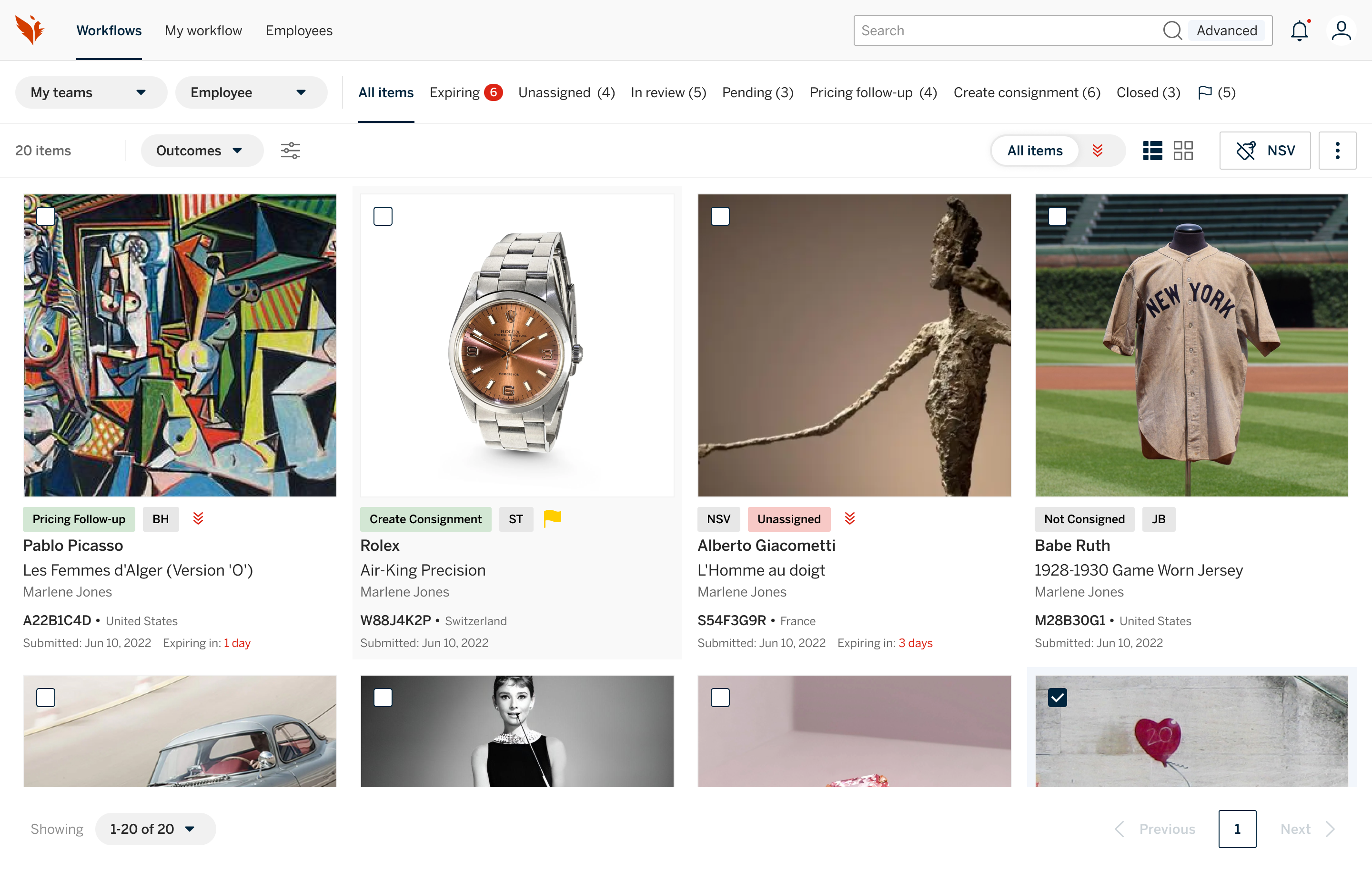
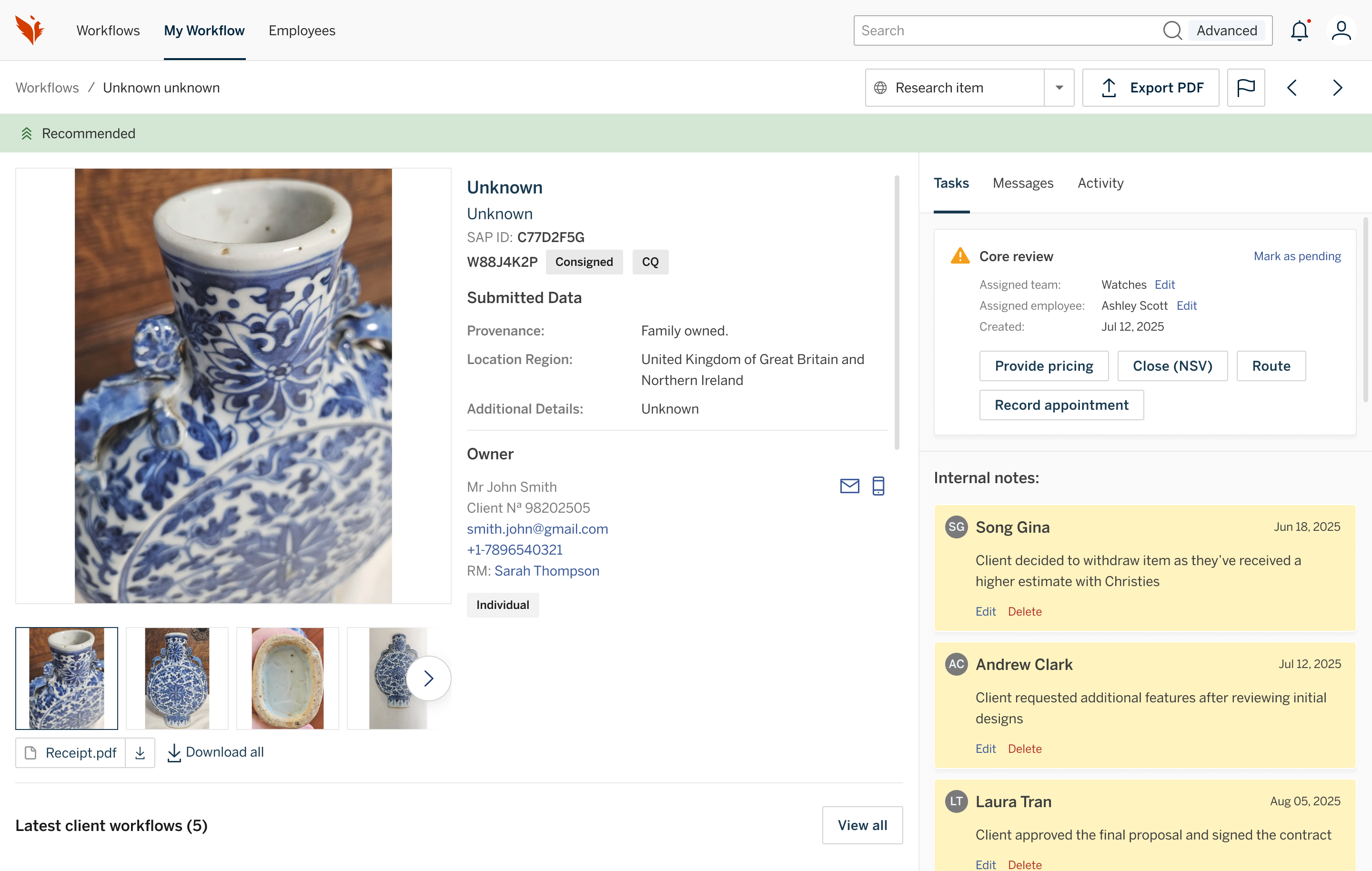
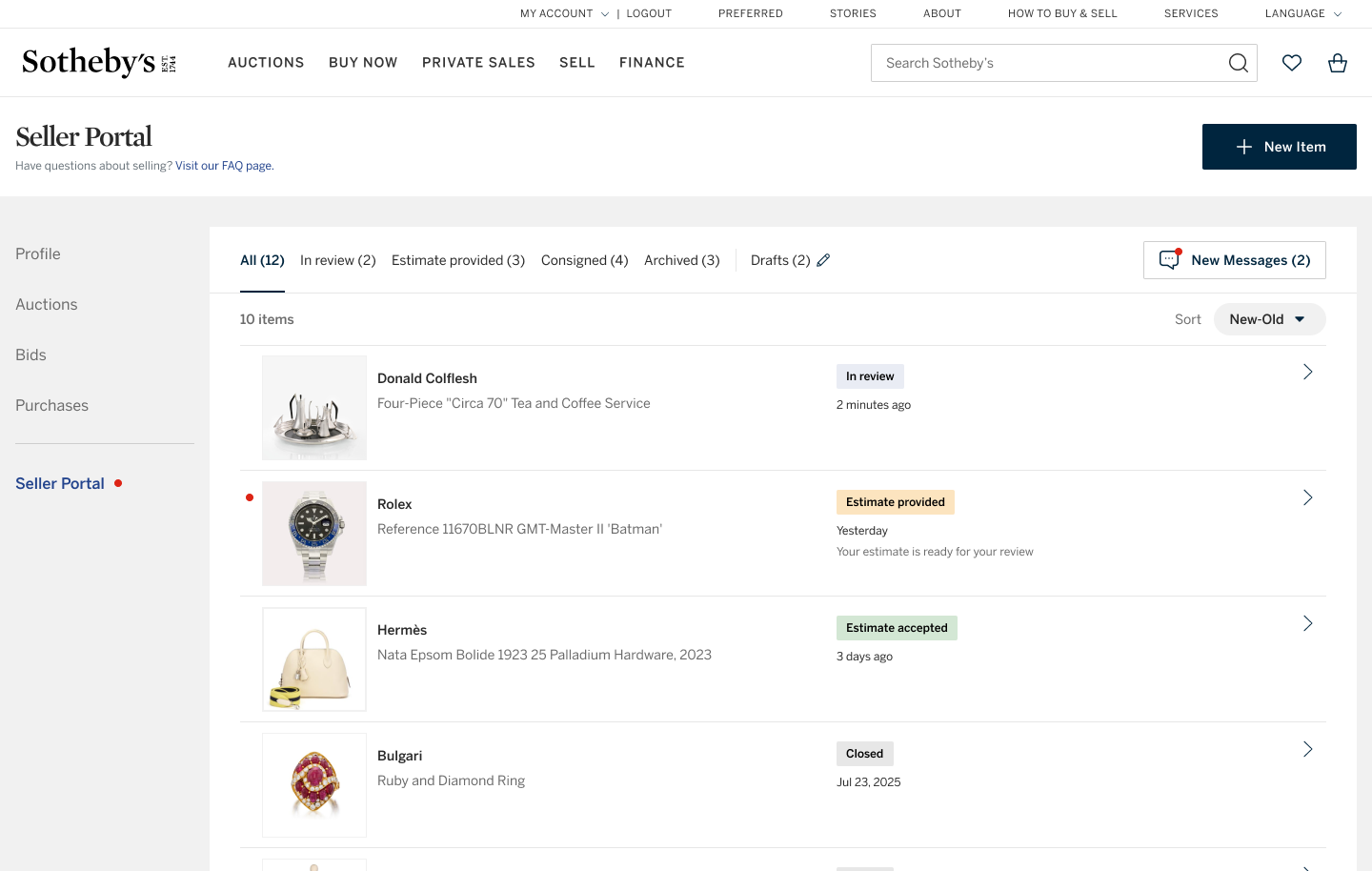
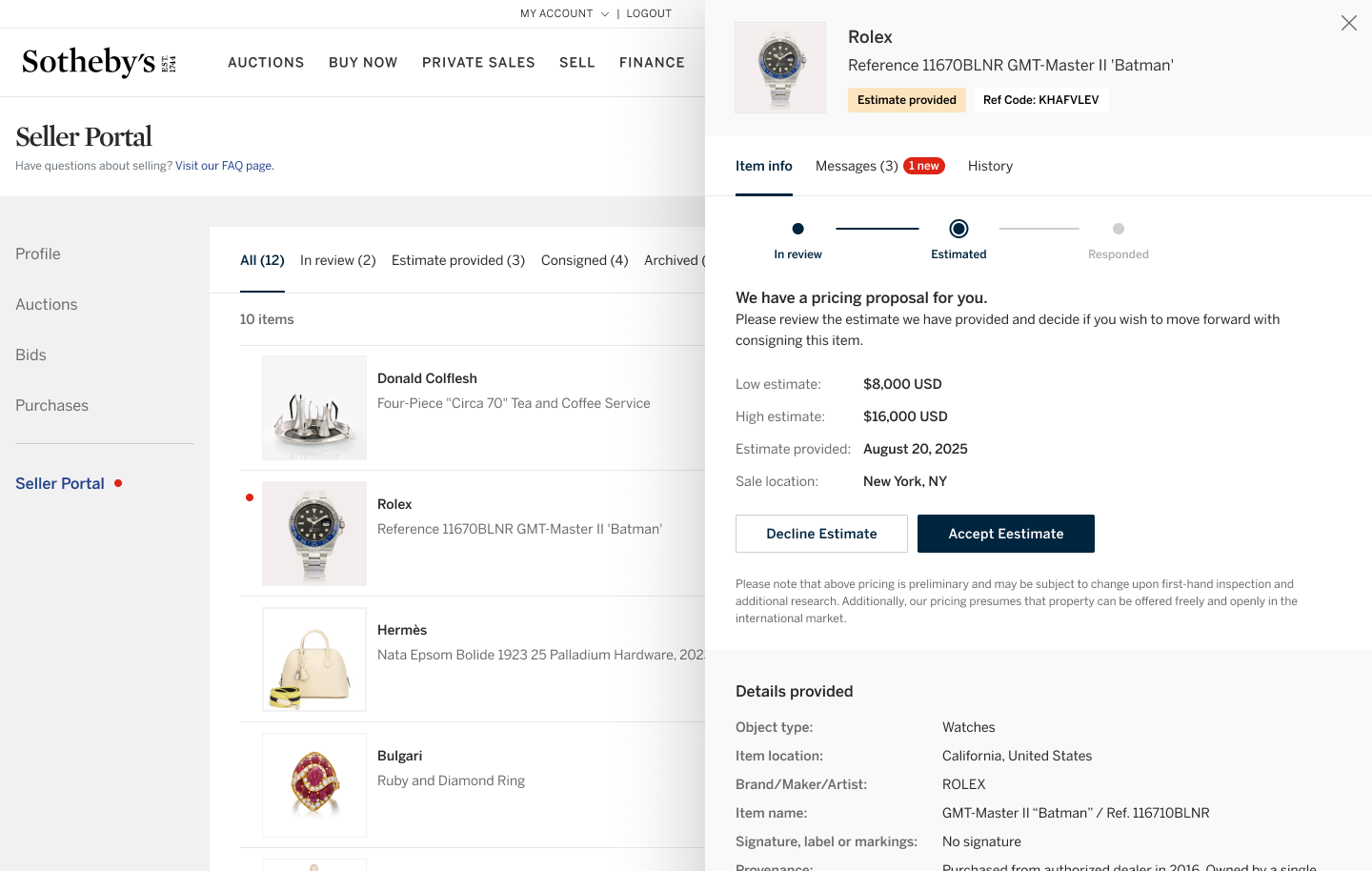
The redesign delivered a more intuitive, transparent, and scalable experience — reducing friction in both data input and decision-making, while enabling a roadmap for AI-driven triage and automation.
"By addressing both user-facing and internal workflows, we unlocked operational efficiency, improved user trust, and drove measurable business outcomes."Project conclusion — Alejandro Cadavid